Introduction
India’s transition to renewable energy has accelerated significantly in the last decade. With ambitious national targets, large-scale solar parks, hybrid wind-solar installations, and utility-grade renewable capacities coming online, the challenges of maintaining grid stability have intensified. SVG execution in India requires specialist EPC teams with deep experience in utility-scale renewable energy projects.
However, while many industry stakeholders recognize the importance of SVGs, there persists a widespread misconception: that SVG execution is just another electrical EPC activity. In reality, SVG execution in India demands specialist expertise, exacting engineering precision, and proven execution experience. General EPC contractors often struggle with the complexities involved, leading to delays, penalties, and operational risks.
In this comprehensive blog, we explore what SVG systems are, why they are indispensable in modern renewable energy environments, and why specialized execution teams — such as those at VSE Solar Pvt. Ltd. — are essential to successful utility-scale deployment in India.
VSE Solar has built its execution model around the growing demand for reliable SVG execution in India across solar and hybrid power parks.
What Is an SVG and Why Does It Matter?
A Static Var Generator (SVG) is a grid support device designed to provide dynamic reactive power compensation. Unlike traditional reactive power solutions like capacitor banks, SVGs use power electronics and advanced control algorithms to respond to real-time changes in grid voltage and reactive power demands.
This capability is especially important for renewable power plants, where generation varies continually due to weather conditions — for example, solar irradiation and wind speed.
Key Functions of SVGs
SVG systems are responsible for:
- Maintaining voltage stability across the grid
- Improving power factor and reducing losses
- Rapid reactive power support
- Complying with grid codes and regulations
- Reducing curtailment and bottlenecks
Without properly executed SVG systems, renewable power plants can experience voltage fluctuations, grid instability, and difficulty achieving the desired Commercial Operation Date (COD).
The Rise of SVGs in India’s Renewable Sector
India’s grid code requirements have evolved rapidly in tandem with the growth in renewable capacity. National and state grid operators now mandate stringent reactive power and voltage support criteria for large renewable installations, especially those connected at 33 kV and above.
As the penetration of solar and wind generation increases, so does the need for dynamic reactive power capability. SVGs are a preferred solution because they deliver:
- Fast response times
- Low harmonic injection
- High reliability
- Minimal maintenance
Unlike traditional mechanical solutions or simple capacitor switching, SVGs use semiconductor switching devices (such as IGBTs) to respond instantly — often in milliseconds — to grid events.
This real-time behavior makes SVG systems invaluable for grid operators and developers alike.
Why SVG Execution Is Not General EPC Work
One of the most persistent misconceptions in the industry is that SVG execution can be treated as routine electrical EPC work. This view underestimates the technical depth, on-site precision, and coordinated integration skills required to deliver SVG systems successfully.
Complexities That Distinguish SVG Execution
1. High-Voltage Electrical Precision
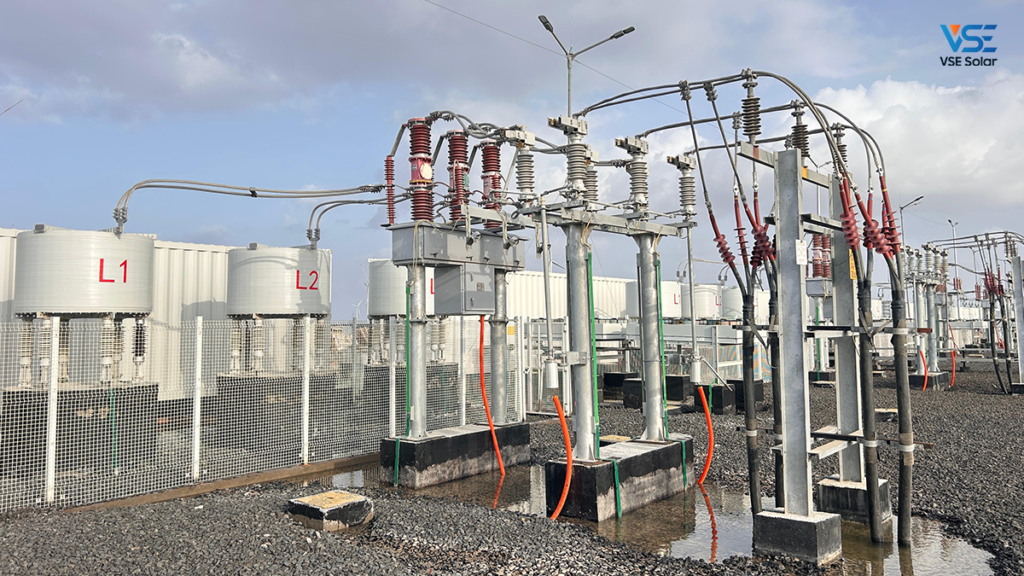
SVG installations involve interfacing both low-voltage (LV) and high-voltage (HV) electrical systems. These systems must be integrated with protective devices, isolators, metering equipment, current transformers, and more.
Critical activities include:
- Correct HT and LT cable routing
- Precision termination at switchgear
- Proper earthing and bonding
- Coordination with protection schemes
Errors at this stage can lead to significant delays or safety risks.
2. Real-Time Grid Control Systems
Unlike passive reactive power solutions, SVGs are highly dynamic. They interact with:
- SCADA systems
- Grid monitoring systems
- Relay logic and settings
- Communication protocols
This requires a deep understanding of grid behavior, telemetry, communication layers, and integration best practices. It isn’t enough to install the hardware — execution teams must ensure correct synchronization with the grid operator’s monitoring infrastructure.
3. Tight Commissioning and Acceptance Criteria
In utility-scale projects, the SVG’s commissioning timeline is tightly integrated with the broader plant’s COD — meaning delays directly impact revenue.
Commissioning includes:
- Pre-commissioning checks
- Equipment acceptance tests (FAT)
- Site acceptance tests (SAT)
- CEIG inspections and approvals (where applicable)
Missed deadlines can result in penalties, higher financing costs, and contractual complications.
SVG Execution Challenges in Utility-Scale Renewable Projects
Across India, developers and EPCs face similar challenges during SVG implementation:
- Lack of in-house specialized SVG execution teams
- Coordination challenges between civil and electrical scopes
- Improper SCADA and relay configurations
- Inadequate pre-commissioning and FAT documentation
- Logistics constraints in remote project sites
These challenges are magnified in projects with multiple SVG sets or high MVAR capacities — such as in mega solar parks or hybrid power zones.
VSE Solar Pvt. Ltd.: Specialist SVG Execution Expertise
Founded with a focus on execution excellence, VSE Solar Pvt. Ltd. (formerly Varsha Solar Electric) has carved a niche in India’s renewable EPC landscape. The company specializes in:
- Static Var Generator execution
- Solar AC/DC electrical works
- HT cabling and protection scheme implementation
- USS electrification
- Hybrid plant systems
- Battery Energy Storage Systems (BESS)
With a strong presence in Rajasthan, Gujarat, and other power zones, VSE Solar has become a trusted execution partner for developers, OEMs, and system integrators.
Why VSE Solar’s Approach Is Different
What sets VSE Solar apart is its execution-first philosophy, grounded in:
- Strong in-house teams
- Technical leadership
- Independent QC systems
- ERP-driven execution tracking
- Repeatable delivery cycles
This execution DNA ensures that projects are delivered on time, with minimal rework and zero compromise on safety or compliance.
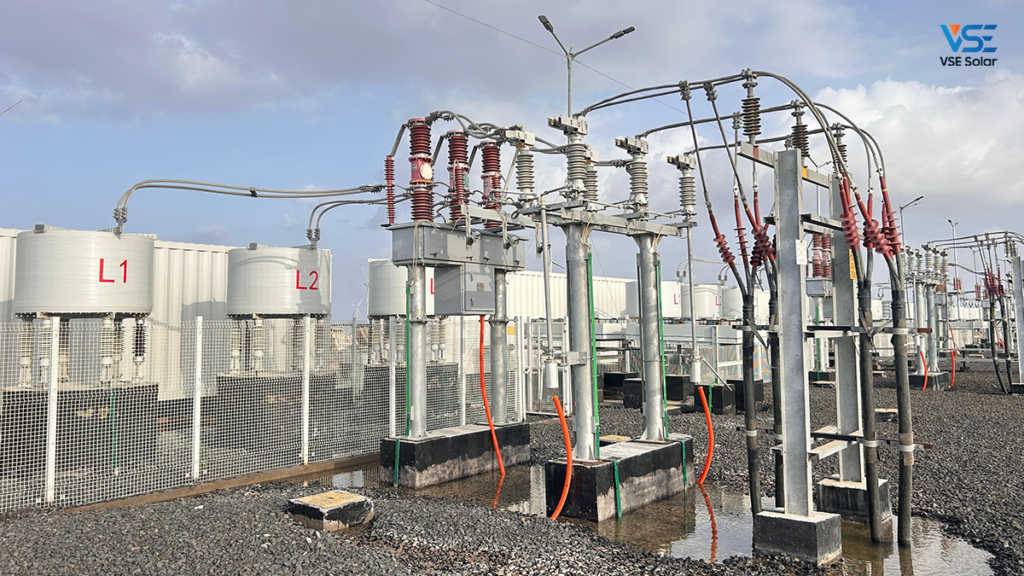
Proven Track Record: 31 × 50 MVAR SVGs at Khavda
Execution experience matters, and VSE Solar’s record speaks for itself.
Project Snapshot: Khavda Renewable Energy Park
- Location: Khavda Solar Park, India
- Client: Adani Group
- Scope: 31 sets of 50 MVAR SVG systems
- Key Differentiators:
- Fastest erection-to-commissioning turnaround
- Zero penalties
- In-house commissioning teams
- Full documentation and compliance support
Across multiple sets, the company has achieved consistent delivery, demonstrating both scale and repeatability — essential traits for utility-scale portfolios.
In-House Execution: The VSE Solar Advantage
One of VSE Solar’s most critical competitive advantages is its zero-dependency execution model for SVG work.
What In-House Execution Includes
- Trained installers and electricians exceeding industry norms
- Calibrated tools and test equipment
- Dedicated engineering and commissioning teams
- Pre-commissioning checks and FAT performed by internal teams
- Daily QC logs and tracking via an internal ERP system
This model ensures:
- Better technical control
- Faster issue identification and resolution
- Clear accountability
- Quality consistency across projects
By keeping execution internal, VSE Solar eliminates the common execution pitfalls associated with subcontracting.
End-to-End Turnkey SVG Capability
Unlike general EPC players who may fragment execution across subcontractors, VSE Solar offers turnkey SVG services, meaning all phases of work are handled under one umbrella.
Turnkey Services Include
Civil Works
- Excavation and PCC/footing preparation
- RCC foundation casting
- Cable trenching
- Plinth and grounding system preparation
Electrical Erection
- HV/LV equipment positioning
- Switchgear and isolator installation
- HT cable laying and termination
- Control panel and AC distribution boards
Commissioning and Compliance
- Pre-commissioning testing
- SCADA and communication integration
- Final commissioning
- CEIG approvals (where required)
- Documentation and handover
This full-scope capability removes coordination overheads and accelerates delivery.
SVG Execution in Harsh Line-of-Business Conditions
Utility-scale projects frequently span remote locations, extreme temperatures, and logistical constraints. VSE Solar’s execution competence shows up distinctly under such conditions.
The team has executed SVG systems under:
- Harsh climatic conditions
- Tight grid synchronization windows
- Complex SCADA and telemetery configurations
- Challenging site access and material handling constraints
These scenarios have all resulted in zero incidents, zero penalties, and repeat orders, which is an unmatched testament to execution reliability.
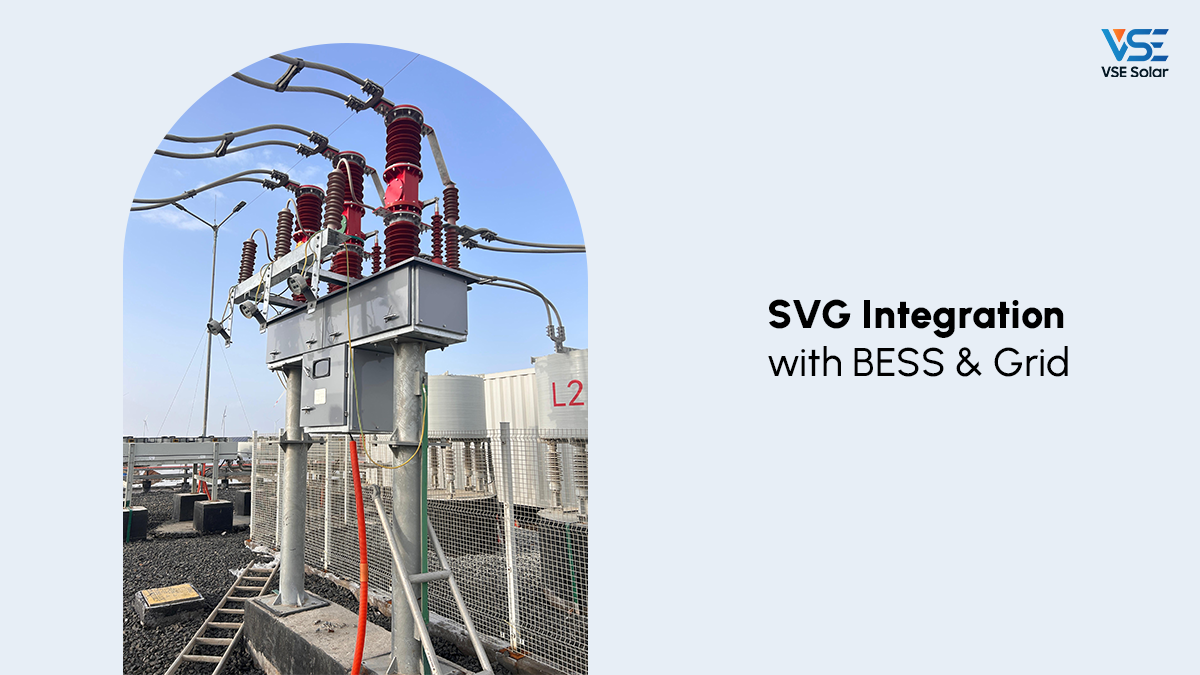
SVG Integration: SCADA, Relays, and Grid Systems
One of the most nuanced aspects of SVG execution is how it interacts with grid monitoring and control systems.
Unlike passive reactive power solutions, SVGs must integrate with:
- SCADA systems
- RTUs and telemetry
- Relay settings
- Remote monitoring platforms
This means execution is not just about hardware placement — it requires system-level engineering, control logic verification, and network coordination.
This expertise is why many developers and OEM partners prefer execution specialists like VSE Solar over general EPC contractors.
SVG, BESS, and Hybrid Deployments: Expanding the Scope
SVG systems increasingly work in tandem with other advanced grid elements such as Battery Energy Storage Systems (BESS) and hybrid solar-wind plants.
When SVGs are integrated with BESS:
- Reactive power support becomes more dynamic
- Grid compliance becomes more stringent
- Control logic becomes more complex
VSE Solar’s experience with both SVG and BESS execution helps it manage these integrated portfolios with confidence.
Regulatory Compliance and CEIG Signoff
In many utility and industrial applications, SVG installation requires signoff from statutory authorities such as the Chief Electrical Inspector (CEIG) and other regulators.
This compliance is not merely a bureaucratic checkbox — it reflects:
- Proper safety practices
- Equipment conformity
- Correct protection coordination
- Verified commissioning
VSE Solar’s track record includes full compliance documentation and successful CEIG approvals on projects where required.
Why Developers and IPPs Choose Specialist Execution Partners
The decision to engage a specialist execution partner — rather than a general EPC contractor — comes down to measurable outcomes:
- Faster deployment cycles
- Lower commissioning failures
- Better quality assurance
- Reduced warranty costs
- Improved grid compliance
For developers and independent power producers (IPPs), these outcomes translate into:
- Earlier COD dates
- Better ROI
- Fewer compliance headaches
In the renewable energy landscape, where margins are tight and timelines are contractual, execution precision is a strategic advantage.
The Future of SVG Execution in India
As India’s renewable infrastructure matures, the need for advanced grid support systems like SVGs will only grow. SVGs represent a foundational technology for:
- Higher renewable penetration
- Better grid balancing
- Reduced curtailment
- Enhanced reactive power support
To fully realize these advantages, developers will increasingly turn to execution specialists with proven track records, deep technical expertise, and the operational discipline to deliver complex installations on time, every time.
VSE Solar’s focus on SVG execution positions it squarely for this future.
Conclusion
SVG execution in India is no longer a secondary electrical activity — it is a core infrastructure discipline that directly impacts grid stability, project compliance, and financial outcomes.
The industry requires execution teams that:
- Understand high-voltage systems
- Can integrate SCADA and relay logic
- Deliver turnkey solutions
- Navigate regulatory environments
- Operate safely under demanding conditions
VSE Solar Pvt. Ltd. embodies these capabilities. With a strong execution track record, in-house execution model, turnkey delivery, and renewable grid expertise, it stands out as a trusted specialist partner for utility-scale SVG execution in India.
In a market where precision and reliability define success, specialist execution is not an option — it is a necessity.