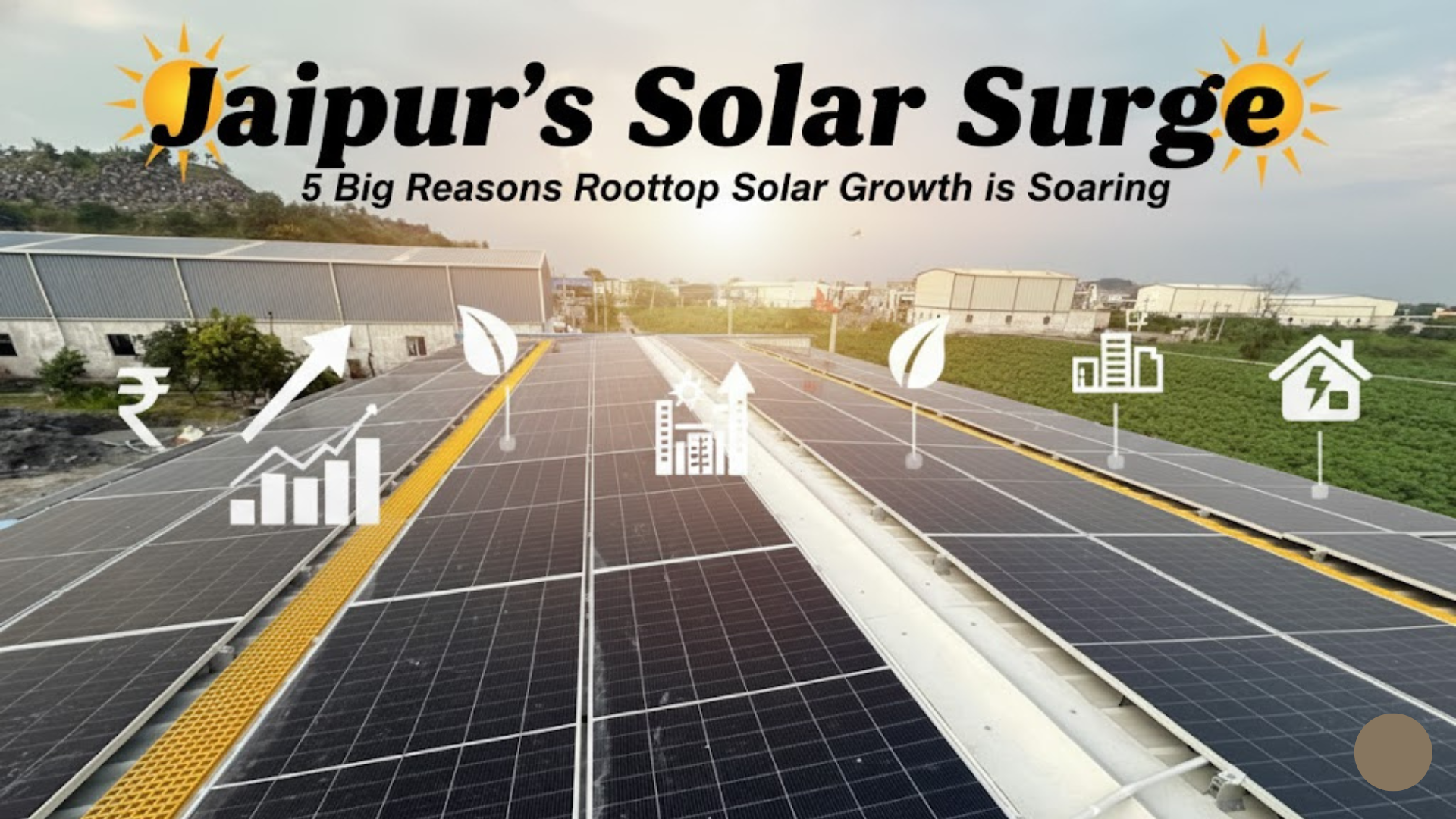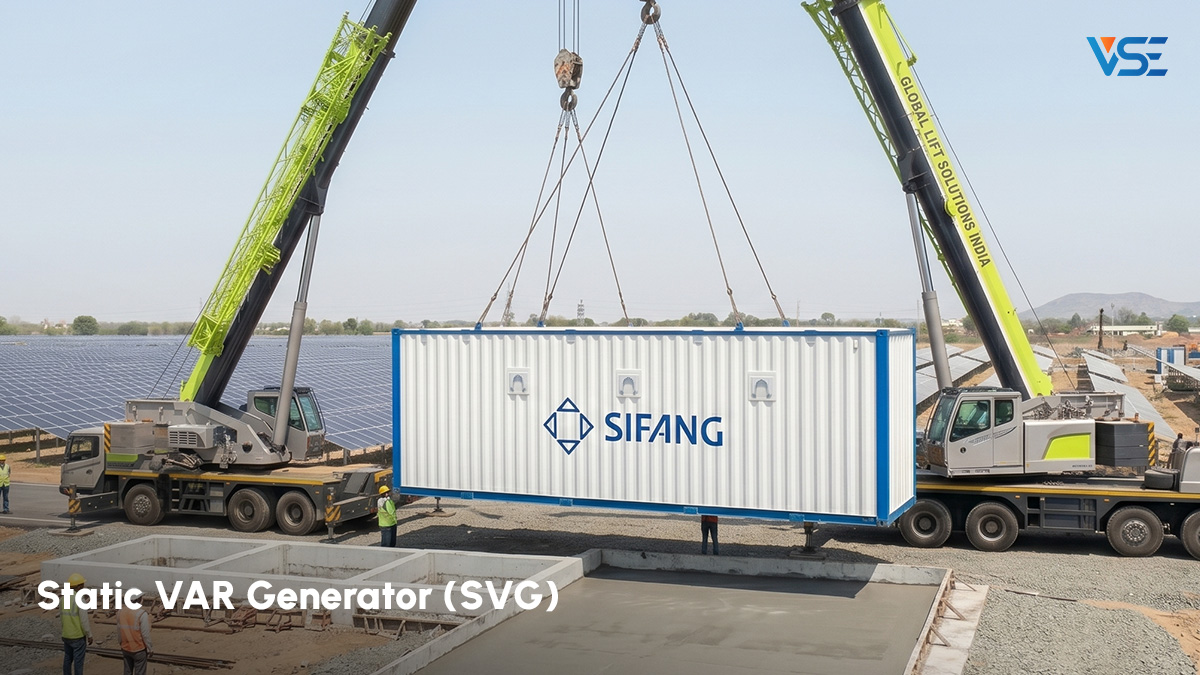
India’s solar energy capacity is growing at a record pace. However, grid stability, voltage fluctuations, and reactive power management remain major challenges for renewable energy and industrial power infrastructure. This is why Static Var Generator (SVG) systems have become essential for maintaining power quality and grid compliance across India.
At VSE Solar, we have successfully executed 71+ SVG sets — and the number continues to grow across India’s renewable energy and industrial sectors. Our projects support utility-scale solar plants, manufacturing industries, and critical grid infrastructure requiring advanced reactive power compensation and voltage stability solutions.
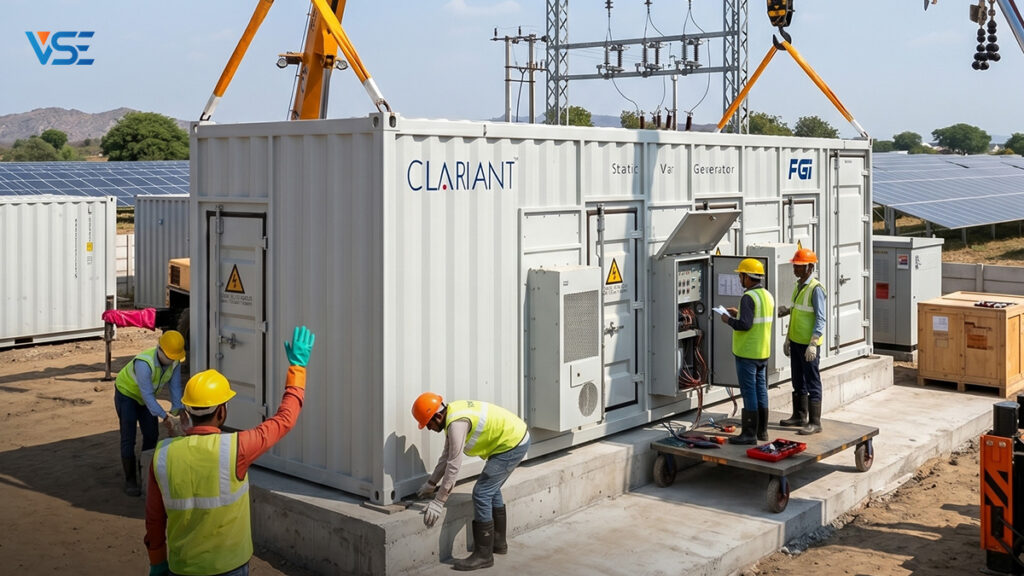
We have delivered SVG installation, testing, and commissioning services for leading companies including Adani, Tata Power, NTPC, Avaada, Clariant Power System Limited, and Beijing Sifang Automation. Our ongoing projects include high-capacity 45 MVAR and 50 MVAR containerized SVG systems designed for demanding grid stabilization applications.
What is a Static Var Generator (SVG)?
A Static Var Generator (SVG) is an advanced power electronics device designed for dynamic reactive power compensation in electrical systems.
In simple terms, an SVG continuously monitors the power network and instantly injects or absorbs reactive power (MVAR) in real time. This helps maintain voltage stability and keeps the power factor close to unity.
It uses high-speed IGBT (Insulated Gate Bipolar Transistor) based voltage source converter technology, making it significantly faster and more efficient than conventional capacitor banks.
Unlike traditional compensation systems, SVG operates continuously in all four quadrants, enabling it to manage both inductive and capacitive reactive power with high precision and rapid response.
How Does SVG Work? — Working Principle Explained
Understanding the SVG working principle helps engineers and plant owners make the right decisions. Here is a simple breakdown:
Step 1 — Sensing:
The SVG’s Current Transformer (CT) continuously measures the current and voltage at the Point of Common Coupling (PCC).
Step 2 — Processing:
The SVG controller analyzes the measured data. It calculates the exact amount of reactive power that needs to be injected or absorbed.
Step 3 — Compensation:
The IGBT-based converter generates the required compensating current. This current is injected into the system in less than 20 milliseconds.
Step 4 — Regulation:
The system continuously repeats this cycle. Therefore, voltage is regulated in real time — even under rapid load changes.
This makes SVG far superior to capacitor banks, which are switched in steps and cannot respond fast enough.
Why Industries and Solar Plants Need SVG Installation
Many solar plants and factories face similar problems:
- High reactive power demand from motors, inverters, and variable frequency drives (VFDs)
- Frequent voltage sags and swells
- Low power factor leading to utility penalties
- Harmonic distortion from non-linear loads
- Risk of grid disconnection during faults
However, with a proper SVG installation, all these problems are solved — simultaneously. That is why Static Var Generator SVG installation in India is growing rapidly across industries.
Industries that urgently need SVG include:
- Solar and wind power plants
- Steel mills and rolling mills
- Cement and chemical plants
- Textile factories
- Sugar plants
- Data centers
- Railway traction substations
- Mining operation
Furthermore, India’s grid code regulations now mandate dynamic reactive power support from all large renewable plants. Therefore, SVG installation is no longer optional — it is a compliance requirement.
SVG vs Capacitor Bank — Key Differences
| Parameter | SVG (Static Var Generator) | Capacitor Bank |
| Response Time | Milliseconds (<20 ms) | Seconds |
| Control Type | Automatic & continuous | Step-based |
| Voltage Stability | High | Limited |
| Harmonic Handling | Yes | No |
| Performance at Low Voltage | Excellent | Poor |
| Maintenance | Very low | Moderate |
| Grid Compliance | Fully compliant | Limited |
👉 Conclusion: SVG is a modern, dynamic, and more reliable solution compared to traditional capacitor banks.
Benefits of Static Var Generator (SVG)
Real-Time Power Factor Correction
Maintains power factor close to unity, reducing utility penalties.
2. Voltage Stability Improvement
Prevents voltage dips, swells, and fluctuations in the system.
3. Harmonic Reduction
Reduces distortion caused by VFDs, inverters, and non-linear loads.
4. Faster Dynamic Response
Responds within milliseconds to load changes.
5. Reduced Energy Losses
Improves system efficiency and reduces transmission losses.
6. Equipment Protection
Reduces stress on transformers, cables, and switchgear.
7. Grid Code Compliance
Ensures compliance with CEA and utility regulations for solar plants.
Applications of SVG in India
SVG systems are widely used in:
Solar Power Plants
To manage reactive power fluctuations caused by changing irradiation.
Industrial Plants
For stable operation of heavy machinery and non-linear loads.
Wind Energy Projects
To stabilize voltage in remote grid-connected systems.
SVG Installation Process
A professional SVG installation service includes the following steps:
- Site survey and load analysis
- System sizing and engineering design
- Civil foundation and site preparation
- Electrical installation of SVG panels
- Testing and protection configuration
- Grid synchronization and approval
- Commissioning and performance validation
This ensures safe, efficient, and grid-compliant operation of the system.
SVG Installation for Power Factor Correction
Power factor correction using SVG is one of the most common requirements across Indian industries and solar plants.
Poor power factor means you are drawing more current than needed. This results in:
- Higher KVA demand charges from DISCOM
- Penalties for low power factor (below 0.90 in most states)
- Overloading of cables, transformers, and switchgear
- Voltage instability at the plant busbar
SVG corrects power factor continuously and in real time. Unlike capacitor banks, SVG does not create resonance or switching transients. Therefore, it is the safest and most effective power factor correction solution available today.
For solar power plants, grid codes in India require:
- Power factor between 0.95 lagging to 0.95 leading at the delivery point
- Dynamic reactive support during voltage disturbances
- LVRT capability up to 150 ms at 0% voltage
SVG meets all these requirements automatically and without manual intervention.
Dynamic Reactive Power Compensation Using SVG
Dynamic reactive power compensation is different from static compensation. It responds in real time to every load change — not just at fixed intervals.
Traditional capacitor banks switch in discrete steps. They cannot respond to fast load changes in factories or solar plants. However, SVG provides stepless, continuous compensation within milliseconds.
It is especially effective in:
- Solar plants with variable generation
- Arc furnaces and rolling mills
- VFD-driven industrial systems
- Heavy motor load applications
Unlike capacitor banks, SVG responds instantly to fluctuations, ensuring stable system performance.
SVG Panel Installation for Harmonic Reduction
Harmonic distortion is a growing problem in modern electrical systems. Solar inverters, VFDs, UPS systems, and power electronic loads all generate harmonics.
High harmonic levels cause:
- Overheating of transformers and cables
- Malfunctioning of protection relays
- Interference with communication and SCADA systems
- Higher energy losses in the network
- Risk of IEEE 519 and IEC 61000 non-compliance
SVG panel installation addresses harmonic distortion in two ways:
- The SVG’s IGBT converter generates counter-harmonic currents to cancel out existing harmonics.
- Additional passive or hybrid filter stages can be added to the SVG for deeper harmonic suppression.
This makes SVG a combined solution for both reactive power compensation and harmonic reduction — in a single compact panel.
Grid Code Requirements and SVG in India
India’s grid codes are becoming stricter as renewable energy penetration increases. The Central Electricity Authority (CEA) and CERC have issued detailed regulations for grid connectivity of solar and wind plants.
Key requirements include:
- Reactive Power Range: 0.95 power factor lagging to 0.95 leading at the delivery point
- Voltage Regulation: Plant must support grid voltage within ±5% of nominal
- LVRT Requirement: Plants must stay connected during voltage dips up to 150 ms
- Fault Ride Through (FRT): Plants above 50 MW must provide dynamic reactive support during grid faults
- Harmonic Standards: THD must comply with IEEE 519 limits
Static Var Generator SVG installation ensures all these requirements are met automatically. Without SVG, solar plants risk disconnection notices and financial penalties from DISCOMs and CTU/STU.
For reference, the full CEA Grid Connectivity Standards are available at cea.nic.in
Why Choose VSE Solar for SVG Installation Services in India
VSE Solar Private Limited is India’s trusted provider of Static Var Generator installation services for utility-scale renewable energy projects and industries.
Here is why leading developers and EPCs choose VSE Solar:
🏆 Proven Track Record — 71+ SVG Sets Executed
VSE Solar has successfully executed 71+ sets of 50 MVAR SVG systems across India. This includes the landmark 30 GW Khavda Renewable Energy Park — one of the world’s largest renewable energy projects.
🤝 Trusted by India’s Top Energy Companies
VSE Solar works with Adani Group, Tata Power, NTPC, Avaada, Apraava Energy, Mahindra Susten, and TBEA. This long-standing client base reflects consistent quality and reliability.
⚙️ Complete In-House Execution — No Subcontractors
VSE Solar performs all SVG erection and commissioning with its own trained teams. There is zero dependency on subcontractors for critical works. This ensures quality control, safety, and on-time delivery.
📈 318% CAGR Growth in SVG Projects
With a 318% CAGR growth rate over three years, VSE Solar continues to be one of the fastest-growing SVG execution partners in India.
🔒 100% Grid Compliance and Safety Record
All VSE Solar SVG projects are executed in line with IEC standards, CEIG regulations, and client specifications. The company maintains a 100% grid compliance and safety record.
🛠️ Turnkey Delivery — Civil to Commissioning
VSE Solar provides complete turnkey SVG project delivery — covering civil foundations, electrical erection, protection setup, SCADA integration, CEIG approvals, and grid synchronization.
“VSE Solar is not just capable — they are field-proven, grid-ready, and dependable.”
FAQs on Static Var Generator (SVG)
Q1. What is a Static Var Generator (SVG)?
A Static Var Generator (SVG) is a power electronics device that provides real-time reactive power compensation. It uses IGBT-based voltage source converters to inject or absorb reactive power and maintain power factor and voltage stability in electrical systems.
Q2. Why is SVG used in solar power plants?
Solar inverters primarily generate active power (MW). However, grid codes require plants to also manage reactive power (MVAR). SVG provides dynamic reactive power support, maintains power factor, and enables LVRT compliance — all of which are mandatory for solar plants connected to the Indian grid.
What is the difference between SVG and SVC?
SVG (STATCOM) uses IGBT-based voltage source converters and responds in under 20 ms. SVC (Static Var Compensator) uses thyristor-controlled reactors and capacitors with slower response times. SVG performs better at low voltages and generates fewer harmonics than SVC.
Q4. What is the difference between SVG and capacitor banks?
SVG provides continuous, stepless reactive power compensation within milliseconds. Capacitor banks switch in discrete steps over seconds. SVG also supports LVRT, reduces harmonics, and performs better under low voltage conditions — making it far more suitable for modern solar and industrial applications.
Q5. How is SVG sized for a solar power plant?
SVG sizing is based on a detailed load flow and reactive power study. As a general rule, SVG rating is approximately 20–30% of the plant’s active power capacity (MW). For example, a 100 MW solar plant typically requires a ±20 to ±30 MVAR SVG system.
Q6. Is SVG mandatory for solar plants in India?
Yes. CEA grid connectivity regulations require solar plants above 1 MW to maintain power factor between 0.95 lagging to 0.95 leading at the delivery point. Plants above 50 MW must also provide dynamic reactive support during grid disturbances. SVG is the most effective solution to comply with these requirements.
Q7. How long does SVG installation take?
A typical SVG installation project takes 4–8 weeks from mobilization to commissioning, depending on the capacity, site conditions, and CEIG approval timelines. VSE Solar is known for its fast erection-to-commissioning cycles across all SVG projects
Q8. Does VSE Solar provide SVG installation services across India?
Yes. VSE Solar provides SVG installation, erection, and commissioning services across India — with a strong operational presence in Rajasthan, Gujarat, Maharashtra, Karnataka, and other key renewable energy states.
Conclusion
The Static Var Generator (SVG) is no longer a luxury for solar plants and industries — it is an essential component of modern power infrastructure in India.
As renewable energy capacity grows, grid stability demands are increasing. SVG provides the dynamic reactive power compensation that solar plants, factories, and utilities need to stay compliant, efficient, and profitable.
Whether you are planning a new solar plant, upgrading an industrial facility, or facing power factor penalties from your DISCOM — SVG installation is the proven solution.
VSE Solar brings over 71+ SVG sets of experience, a 100% grid compliance record, and in-house execution teams — making us India’s most reliable SVG installation service partner.
📞 Ready to Install SVG at Your Plant?
Talk to VSE Solar’s engineering team today.
📧 info@vsesolar.com | 📞 +91 9216015418